Friday, May 20, 2011

Quarter 4 Biography - Bart Bok


          Bart Bok was born on April 28, 1906 in the Netherlands. He spent much of his childhood in the then Dutch East Indies, currently Indonesia.He studied at the Universities at Leiden (1924-27) and Groningen (1927-29) Universities in the Netherlands. He moved to the United States in 1929 and became naturalized in 1938. In 1929, he married fellow astronomer Dr. Priscilla Fairfield Bok. From the years 1929 to 1957 he worked at Harvard University, holding the position of director of astronomy from 1947 onward. Bok spent the period 1957–66 in Australia as director of the Mount Stromlo Observatory, Canberra, and professor of astronomy at the Australian National University. He returned to America in 1966 to become director of the Steward Observatory, Arizona, until 1970 and professor of astronomy (from 1974 emeritus professor) at the University of Arizona, Tucson.
          Bok's major interest was the structure of our galaxy, the Milky Way. With his wife, Priscilla, he published a survey of the subject: The Milky Way (1941). Although it had been long assumed that the Milky Way had a spiral structure it was not until Walter Baade identified in the 1940s the hot young O and B stars of the Andromeda galaxy as spiral markers that such a conjecture could be confirmed. The actual structure was first worked out in some detail by William Morgan. The existence of 21-centimeter radio signals from clouds of neutral hydrogen in the galaxy was predicted by Hendrik van de Hulst and their discovery in 1951 provided a second tracer. It was clear to Bok by the late 1950s that the radio data, which were expected to support the optical picture, instead contradicted it. He consequently attempted to harmonize the two structures by modifying Morgan's somewhat elliptical arms, making them much more spherical, and giving more emphasis to the Carina–Centaurus arm.
          Bok's name is also associated with his discovery in 1947 of small dark circular clouds visible against a background of stars or luminous gas and since known as Bok globules. Since they are thought to be precursors of stars, as Bok himself conjectured, they have received considerable attention in recent years.

Saturday, April 30, 2011

Zooniverse 4/30/11

I tried a new thing today called "Old Weather." This one was really nice because I felt like it would be very difficult to mess this one up. Basically, you just decipher some cursive and keep track of weather and times and stuff. I looked at old ship's logs from like 1913! That's awesome. I might just stick with this weather watcher...

Tuesday, April 26, 2011

APOD 4.2

See Explanation.  Clicking on the picture will download
the highest resolution version available.
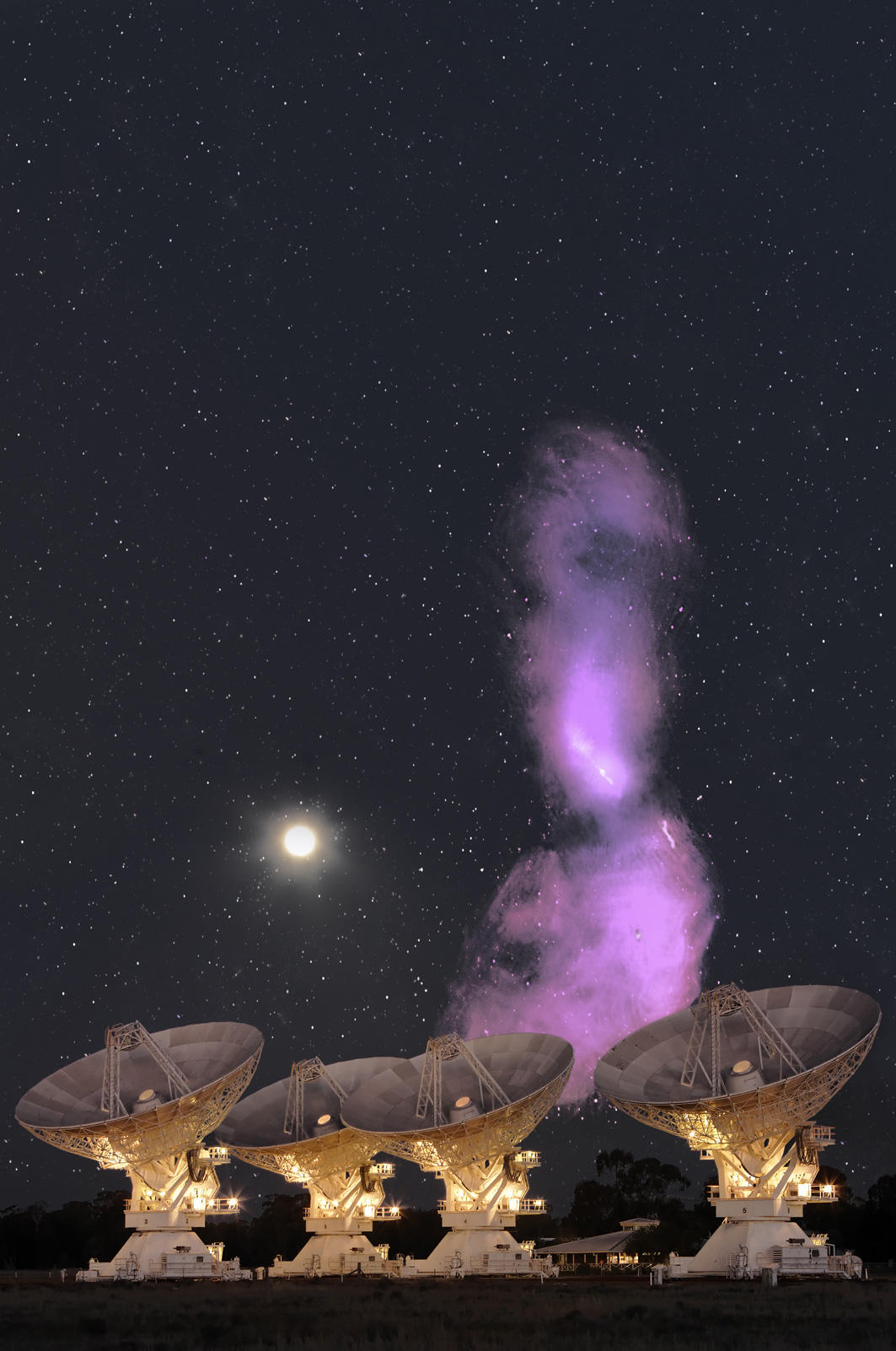
In this picture, radio telescopes from the Australian Telescope Compact Array (ATCA) are seen in front of a full moon and the radio image of Centauri A is superimposed in the background. Centaurus A is an active galaxy that is presumably the result of the collision of two galaxies. The debris are being consumed by a black hole. It is this black hole that produces the fast moving radio jets this long exposure photograph captures. What I had assumed were stars are actually the glow of other radio bright galaxies in the far distant future. How crazy is that!

APOD 4.1

See Explanation.  Clicking on the picture will download
the highest resolution version available.

Depicted here are some baby stars in the Rho Ophiuchi Cloud along with some dust clouds at the infared wavelength. Rho Ophiuchi is one of the nearest star forming regions at 400 light years distant. The stars form against a cold hydorgen cloud and then in turn heat the dust around them, creating the infared glow. Something I didn't know! Stars in the process of formation have their own name, YSO's! young stellar objects are seen in the light pinkish nebula. The average age of these babes is 300,000 years. The redder region in the lower right corner surrounds the star Sigma Scorpii. Impressive. I like these stellar nurseries.

Monday, April 25, 2011

Zooniverse 4/24/11

So, I did some more solar storm watchin' today. I finished my training or what have you and moved on to bigger and better things. They had me watch videos and tag the ones I thought depicted a storm. I used the scan button to view the video at double speed. This made it easier to differentiate stuff.

Friday, April 15, 2011

Zooniverse 4/14/11

Today, I did the SOLAR STORMWATCH. It was sweet. They showed images of the sun and I had to tell if the solar outbursts were either light bulb shaped solar storm and it was fun. Then, I identified comets, particles, and optical effects.

Thursday, March 31, 2011

The Night Sky 3/18/11

So I was out the other night with my buddy and we were kind of looking for something to do. I remembered that I had my star charts in my vehicle as they always are and we brought them out and.... looked up. I'm so glad it happened to be a clear night. Very lucky indeed. We saw Orion of course. His belt as distinct as ever. We saw some planes. We saw the moon, waxing crescent, you see. We saw Taurus the Bull and the Hyades and the Pleiades. We saw Monoceros, I think. And Auriga. It was really nice.

APOD 3.8

See Explanation.  Clicking on the picture will download
the highest resolution version available.

Hey, I reeeaaalllllyyyy like Boston. I like to think of my dear friend who is living there right now. He was looking at this exact moon rise! And what a moon rise it is! On March 19, the moon was at its perigee. It was 14% larger and 30% brighter than a normal moon. I too happened to see the moon on this night and it was quite impressive. The "Supermoon" as it was affectionately termed was very big. The shot was taken from Prospect Hill in Waltham, Massachusetts, roughly 10 miles from the Boston skyline. Just to the left of the orange lunar disk is the distinctive control tower at Boston's Logan International Airport. Topped by lights, the tall, twin towers of the cable-stayed Zakim Bridge spanning the Charles River are also included in the scene

APOD 3.7

http://apod.nasa.gov/apod/ap110328.html

Time-Lapse Auroras Over Norway
So, Norway is very lucky to get to experience all these auroras. I have done many-a post about auroras in the past. They're quite inspiring. Many times the auroras are green, as high energy particles strike the Earth's atmosphere, causing the air to glow as electrons recombine with their oxygen hosts. Other colors are occasionally noticeable as atmospheric nitrogen also becomes affected. In later sequences the Moon and rising stars are also visible. This time lapse was sweeeettt.

APOD 3.6

See Explanation.  Clicking on the picture will download
the highest resolution version available.

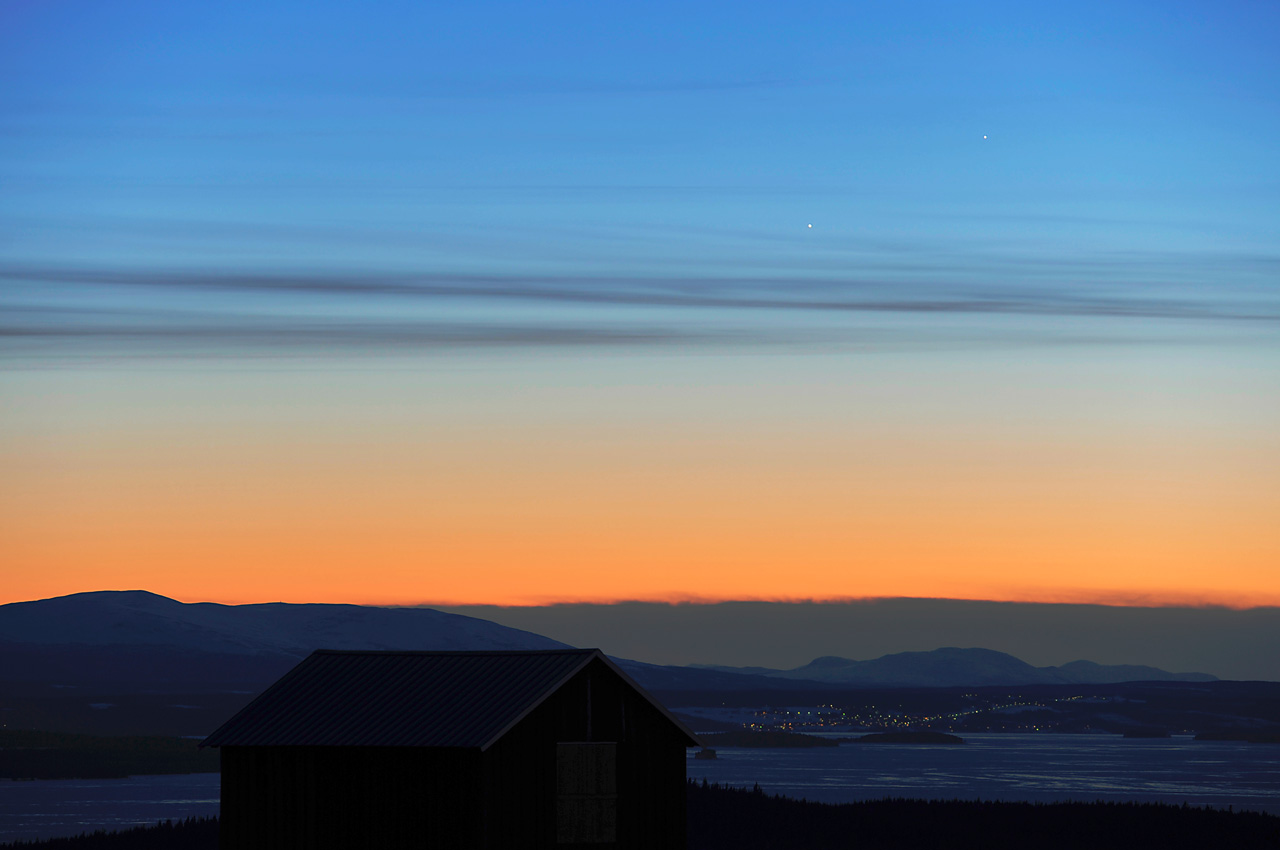
Yeah! Mercury and Jupiter! How cool! NASA reports that there will probably become good views of Mercury this spring as it approaches the northern hemisphere where the ecliptic plane makes a steep angle with the western horizon. This photo was taken off of Froson, an island in Northern Sweden. I'm enjoying looking up at Venus every morning. Planets are so bright and cool.

Monday, March 7, 2011

APOD 3.5

See Explanation.  Clicking on the picture will download
 the highest resolution version available.

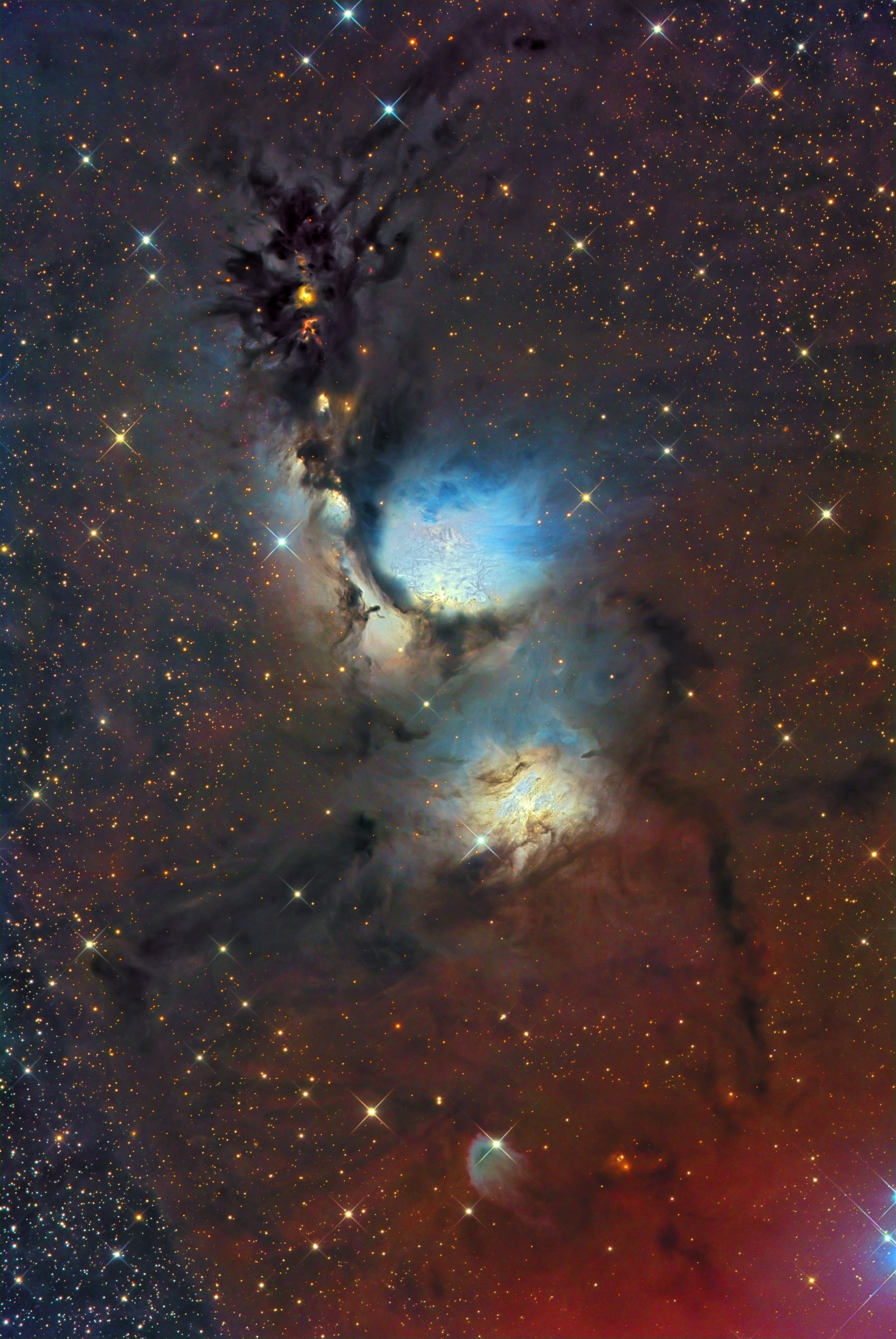
This image makes me think of a Star Wars paraphenalia tee shirt. That's why I chose it. I like Star Wars. All right, so it's not a tee shirt design. It's actually M78 being reflected by some clouds. The dust absorbs light and also reflects it. M78 is about five lightyears across and belongs to the Orion Molecular Cloud Complex. The cloud itself is between 1,500 and 1,600 light-years away and is hundreds of light-years across. The nebula is important because of the sheer size as it spreads several degrees from Orion's Belt to his sword. That's the hilt of Orion's sword! Neat-o!

Thursday, February 24, 2011

Quarter 3 Astronomer Project -- Henrietta Leavitt

Astronomer Project -- Henrietta Leavitt

Hennrietta Swan Leavitt was born on July 4, 1868 in Cambridge, Massachusetts to Congregational church minister George Roswell Leavitt and his wife Henrietta Swan (Kendrick). As a young girl, her family moved to Cleveland, Ohio. She attended Oberlin College and then graduated in 1892 from the Society for the Collegiate Instruction for Women, now known as Radcliffe College. In her senior year of college, Leavitt took her first astronomy course, earning an A- and cementing her interest in the subject. Pursuing the subject, she began graduate work at Harvard University, accepting a position as one of Edward Charles Pickering's computers in the Harvard College Observatory, working for $0.30 an hour. Pickering hired a number of women to measure and catalog the brightness of stars in the observatory's photographic plate collection. Tedious and menial work, Pickering sought to fill the role with women, thus earning his observatory the name "Pickering's Harem." Women in the early 1900's were not allowed to look through telescopes and were not given freedom to work theory. So, even though Henrietta Leavitt had the potential and the knowledge, she was not permitted to maximize her full possibilites.

She was chiefly in charge of cataloguing variable stars, stars whose brightness weakens and strengthens in a recognizable pattern. Studying the Magellanic Clouds, neighbor galaxies to the Milky Way, she discovered 1,777 variable stars. In 1908 she published her results in the Annals of the Astronomical Observatory of Harvard College, noting that a few of the variables showed a pattern: brighter ones appeared to have longer periods. After further investigation, Leavitt was able to classify certain stars as Cepheid variables, stars with a well defined relationship between luminosity and pulsation period.  "A straight line can be readily drawn among each of the two series of points corresponding to maxima and minima," Leavitt wrote of her study "thus showing that there is a simple relation between the brightness of the variable and their periods". Based on the period-luminosity variable, Leavitt determined Cepheid Scale Distances which have been used to determine absolute magnitude beyond the realm of parallax measurements. Prior to her discovery, it was not known that there were other galaxies outside of the Milky Way, because the distances were to great for parallax. Upon her discovery, Edwin Hubble detected the Andromeda Galaxy and the scientific community confirmed that the universe was much bigger than just the Milky Way.

Had Henrietta been allowed the opportunity to pursue her discovery further and had she not died of cancer in 1921, she surely would have contributed greatly to the measurement of the cosmos. Paperwork for her Nobel Prize began in 1924 without knowledge that she had died three years earlier. Hubble himself posits that Leavitt deserved a Nobel. Leavitt was a member of Phi Beta Kappa, the American Association of University Women, the American Astronomical and Astrophysical Society, the American Association for the Advancement of Science, and an honorary member of the American Association of Variable Star Observers. Her early passing was seen as a tragedy by her colleagues for reasons that went beyond her scientific achievements.

Friday, February 18, 2011

The Works Pertaining to Henrietta Leavitt that I Intend to Use on my Quarter 3 Astronomer Project

"A Science Odyssey: People and Discoveries: Henrietta Leavitt." PBS: Public Broadcasting Service. Web. 19 Feb. 2011. http://www.pbs.org/wgbh/aso/databank/entries/baleav.html.

Dictionary of Science Biography. C. Gillispie, editor Charles Scribner's Sons. 1981.

"Henrietta Leavitt Biography | BookRags.com." BookRags.com | Study Guides, Lesson Plans, Book Summaries and More. Web. 19 Feb. 2011. <http://www.bookrags.com/biography/henrietta-leavitt-wop/>.

Sunday, February 13, 2011

APOD 3.4

See Explanation.  Clicking on the picture will download
 the highest resolution version available.


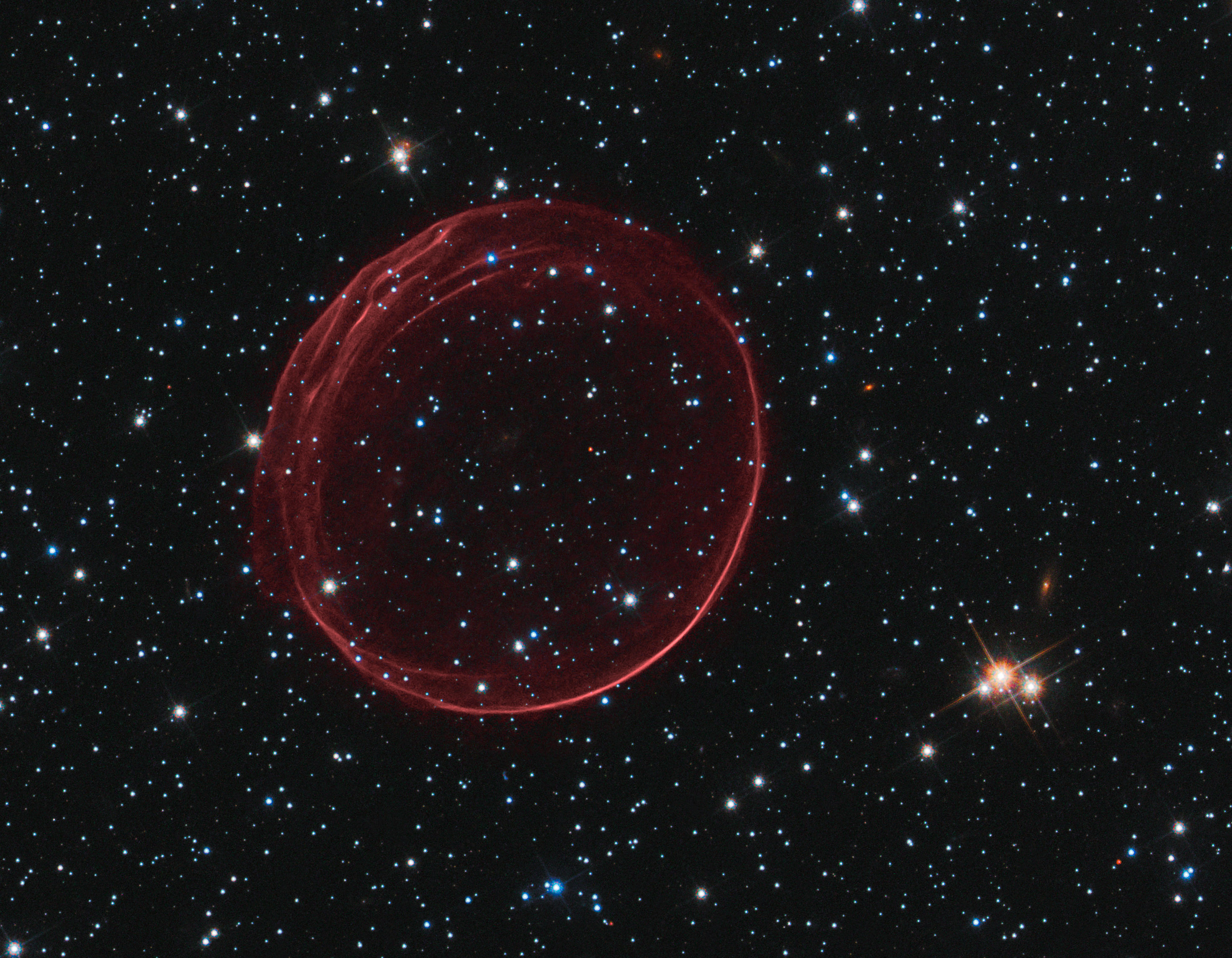
Apparently, I'm impressed by supernova remnants, because here we have yet another post about supernova remnants. Let us become aquainted with SNR 0509-67.5. SNR 0509 spans about 23 light years and lies about 160,000 light years away toward the constellation of the Dorado. The red coloration is attributed to Hubble's filter allowing only light emitted by energetic hydrogen, in red saturation, to be seen. We're not really sure the precise reason for the ripples you see here, but we know the story behind the broader, red glowing ring. The expansion speeds and light echoes relate it to an Type Ia supernova, the explosion of a white dwarf star, that occured 400 years ago.

APOD 3.3

See Explanation.  Clicking on the picture will download
the highest resolution version available.
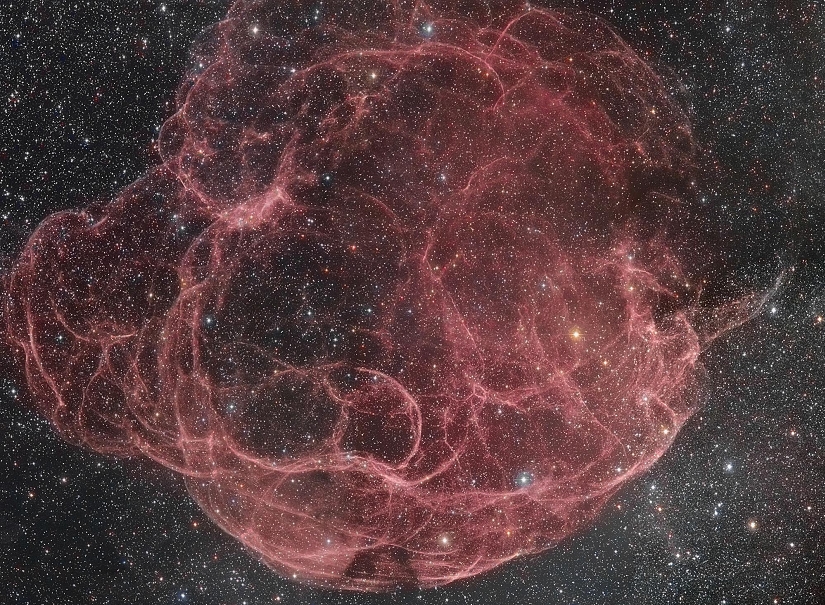
Simeis 147: Supernova Remnant
This supernova remnant has an estimated age of about 40,000 years - meaning light from the massive stellar explosion first reached Earth 40,000 years ago. It is in the direction of Taurus and spans nearly three degrees of the sky (six full moons). Meaning that at a distance of 3,000 lightyears, the width of this debris cloud is about 150 light years wide. The cosmic catastrophe that left behind this remnant also left a pulsar, which is the still spinning core of the original star. The thought of the core still spinning is kind of eerie to me...


The Night Sky 2/10/11

Twas about 9:00 when I ventured into the cold night, star chart in hand, to observe the happenings of the sky. I am pleased to report that my experience was successful. My fears that I wouldn't be able to locate anything were silly and proven no longer viable soon after I gained my bearings and realized that my fears of the winter sky were irrational, and that hey, the winter sky isn't so bad! Immediately, I saw Orion. He doesn't take much effort to find. And I looked at M42, the stellar nursery in the hilt of his sword with binoculars and was very impressed. There were a bunch of stars concentrated in that one area and I thought it was really cool. Near Orion is Taurus, the bull with its signature V shape. I viewed with binocs the Pleaides and the Hyades, even though I've seen them plenty before. I looked for Mr. Percival's tried and true G shape in the winter sky and it turned out pretty well. Castor and Pollux in Gemini? Saw it. Capella in Auriga? Saw it. Sirius in Canis Major? Saw it. It was a good time, but I really want to go to a class stargaze soon so I can get even more comfortable with the winter sky.

APOD 3.2

See Explanation.  Clicking on the picture will download
the highest resolution version available.

Wait, is this real? Or is it something from a dream. Well, I think it's both. This entrancing image was taken just before sunrise on a snowy slope in Switzerland. You've got blankets of clouds covering the small town of Balzers, Liechtenstein. The peaks of the Alps pop far to the right, along with a crescent moon and bright Venus. I'm just imagining the majesty of being the there the moment this photograph was taken. It'd be a truly beautiful experience. I guess this post isn't entirely astronomy related, but it sure is pretty.

APOD 3.1

See Explanation.  Clicking on the picture will download
the highest resolution version available.

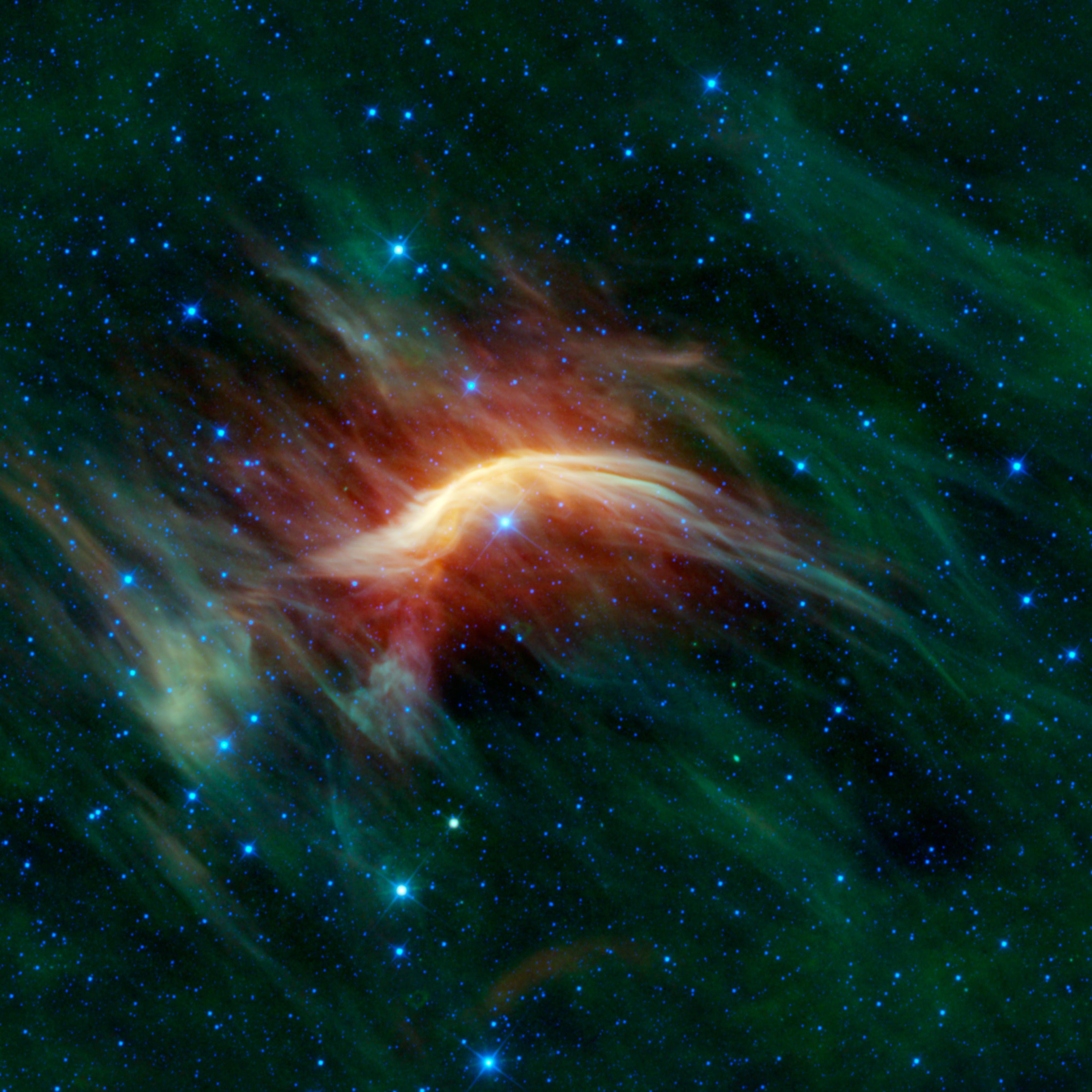
Let us begin this ode to a runaway star by noting the size of this stellar juggernaut. Zeta Oph clocks in at 20 times more massive than the sun and 65,000 times more luminous. Zeta Oph would be one of the brighter stars in the sky if it weren't for the obscuration of it by the surrounding interstellar dust. So what makes Zeta Oph so cool, is that it's actually being propelled through space at a speed of 24 kilometers per second. Probably once a star in a binary system, its partner exploded in a supernova thus jetting Zeta Oph onto a never ending path into empty space. The interstellar gas and dust that surrounds this star, though a slight hindrance to our ability to view it in visible light, makes for a very awesome picture in the infrared. The calm green clouds on the outsides of the star, the brighter, hotter red clouds are seen due to teh amounts of ultraviolet radiaion emitted that heats up the clouds, and the yellow clouds of the bow shock. As the stellar wind pushes through all kinds of other interstellar stuff, it compress it causing it to glow so brightly in the infrared.

Sunday, January 16, 2011

APOD 2.8

See Explanation.  Clicking on the picture will download
 the highest resolution version available.

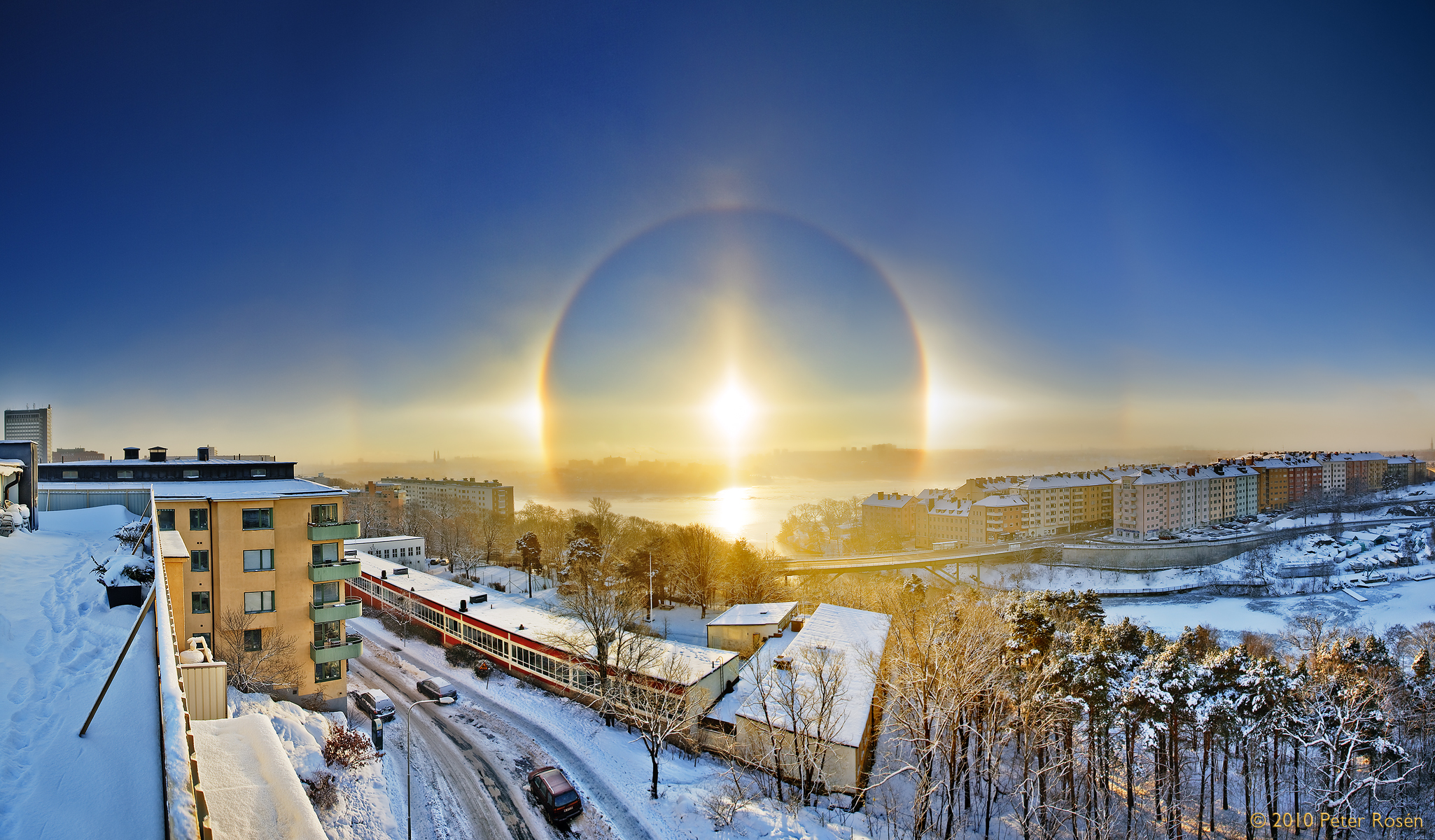
Ah, Stockholm. I have never been, but the progressiveness and much amplified awesomeness of Sweden has made me quite a big fan. The halo around the sun depicted in this image is actually the sun's light being reflected off of ice chrystals. Water that freezes in the upper atmosphere forms small, six-sided ice chrystals which are falling to the ground. They fall with their faces flat, or parallel to the Earth. An Earthly observer may pass through the same plane as the falling ice chrystals at sunrise or sunset. When this occurs, the ice chrystals act as a miniature lens and refract the light creating "sundogs". Neat-o!

Friday, January 14, 2011

APOD 2.7

See Explanation.  Clicking on the picture will download
 the highest resolution version available.

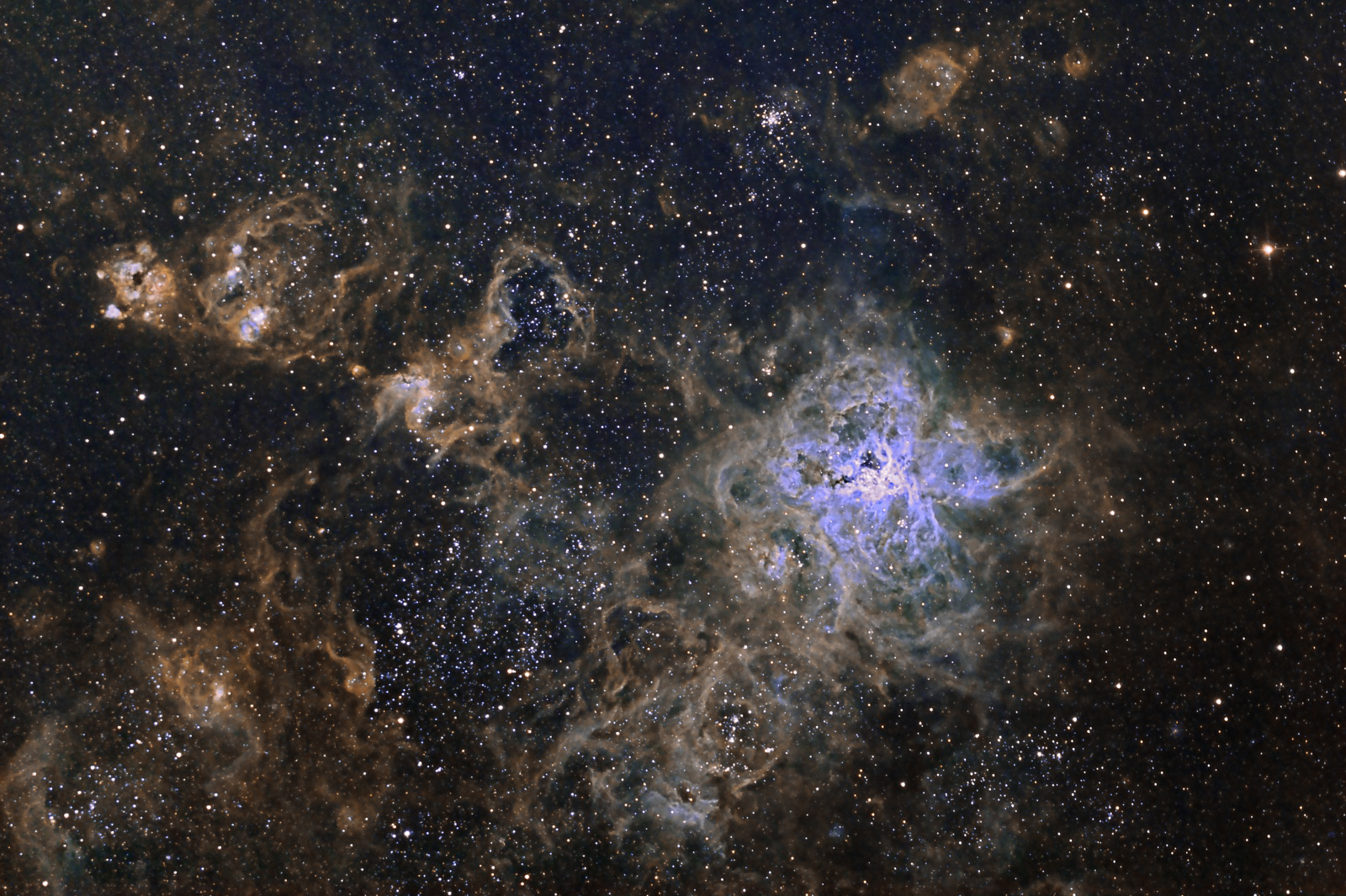
The Cosmic Web of the Tarantula Nebula. I mean... I guess it looks spidery? Whether or not this nebula is indeed deserving of its arachnidan classification, it's still the largest star forming region in the entire galactic neighborhood. Doesn't that diction make it sound like the National Aeronautic Space Association is calling this nebula the 'big kid on the block'. Well, it is. It's located in the Large Magellenic Cloud which is merely a satellite galaxy to the Milky Way. It spans about 1.000 lightyears across. From NASA's description of the photo, "Were it placed at the distance of Milky Way's Orion Nebula, only 1,500 light-years distant and the nearest stellar nursery to Earth, it would appear to cover about 30 degrees (60 full moons) on the sky." So good, I had to include it.